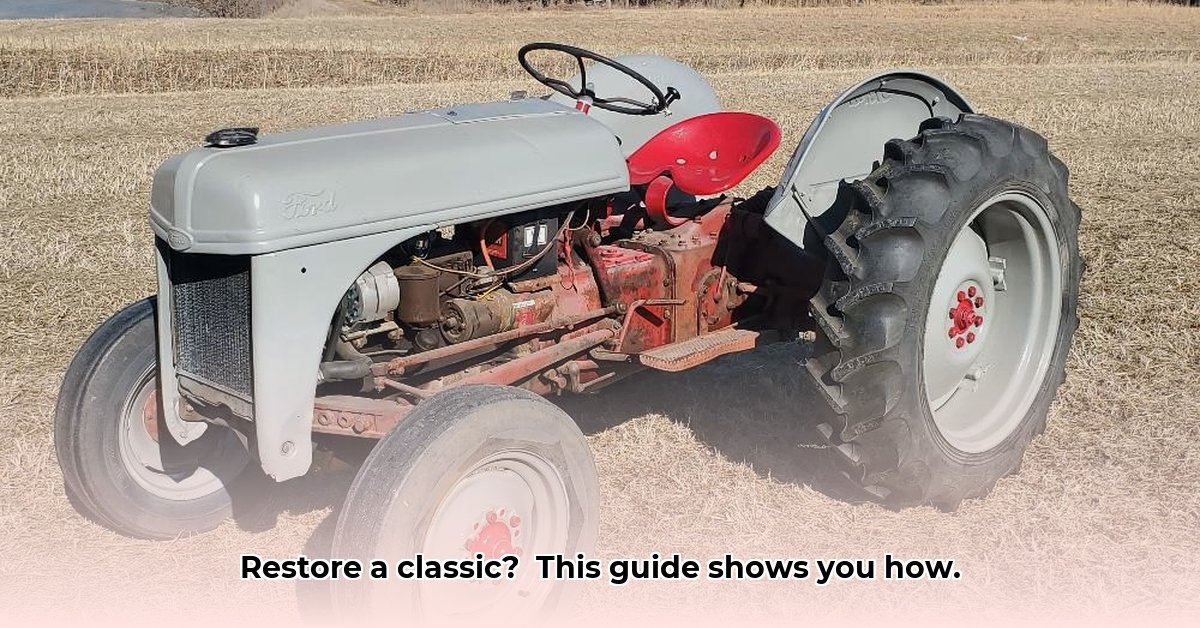
1951 Ford 8N Tractor: A Legacy of American Ingenuity
The 1951 Ford 8N tractor represents a pivotal moment in agricultural history. More than just a machine, it symbolized post-war American innovation and efficiency. Its compact design, coupled with the groundbreaking three-point hitch system (a mechanism that simplified implement attachment), revolutionized farming practices. This iconic tractor's curved fenders and robust build quickly established it as a staple on farms across the nation, a legacy reflected in countless vintage photographs. But what makes restoring a 1951 Ford 8N such a compelling project, and what are the considerations involved? For sourcing hard-to-find parts, check out this helpful resource: Ford 8N parts.
This guide explores the historical significance of the Ford 8N, delves into its mechanics, provides a step-by-step restoration guide, and examines its current market value. Whether you're a seasoned mechanic or simply intrigued by this iconic machine, this comprehensive overview will equip you with the knowledge you need to successfully navigate the restoration process. Did you know that the simplicity of the 8N's design also contributed significantly to its success and widespread adoption? This ease of repair made it a practical and reliable choice for farmers prioritizing dependability.
Design and Engineering: A Technological Leap Forward
The Ford 8N’s success stemmed from a combination of factors. Its compact size improved maneuverability, particularly beneficial for smaller farms. Simultaneously, its powerful engine belied its size, handling various tasks with impressive efficiency. The aforementioned three-point hitch system—a significant engineering advancement—streamlined implement changes, saving farmers considerable time and labor. This innovation, seemingly small in description, significantly impacted farming methods, boosting overall productivity. The relative simplicity of its design further enhanced its appeal, minimizing potential mechanical issues and simplifying repairs. This resulted in a reliable workhorse, cementing its place in agricultural history. Isn't it fascinating how a seemingly simple design detail could have such a profound impact?
Under the Hood: Mechanical Insights and Common Problems
The Ford 8N's gasoline engine, while remarkably robust, can experience certain age-related problems. Carburetor issues are relatively common, often requiring cleaning or adjustment, similar to a standard automobile tune-up. The ignition system can also present challenges – diagnosing these issues necessitates basic mechanical troubleshooting skills. Finally, after decades of use, the transmission might show signs of wear, potentially necessitating repair or replacement. Fortunately, finding replacement parts remains relatively accessible. A thriving community of 8N enthusiasts ensures a ready supply of both new and used parts, often through specialized online retailers and parts suppliers. However, securing original parts for a museum-quality restoration can be time-consuming and expensive, demanding significant research and patience.
Restoration: A Step-by-Step Guide
Restoring a 1951 Ford 8N is a rewarding yet demanding undertaking. This process requires a methodical approach, patience, and a good understanding of mechanical principles. This is not a weekend project, but a journey that may span several months or even years.
Disassembly: Begin by carefully disassembling the tractor, documenting every step with detailed photographs and notes. Labeling each part and its location is critical for efficient reassembly.
Cleaning: Once disassembled, meticulously clean each component, paying attention to rust removal. Wire brushes, solvents, and careful attention are essential here.
Repair and Replacement: Carefully assess the condition of every part. Repair what's repairable and replace components that are beyond repair. Sourcing correct parts requires diligent research and often involves utilizing online resources and contacting specialist parts suppliers.
Reassembly: Utilizing your photographs and notes, meticulously reassemble the tractor, carefully checking each connection to ensure proper function.
Testing and Fine-Tuning: After reassembly, thoroughly test the tractor, addressing any remaining mechanical issues and fine-tuning to ensure smooth operation. This final step represents the culmination of your efforts.
Market Value and Collector Interest
The 1951 Ford 8N commands a notable presence in the collector's market. A well-restored tractor can fetch a substantial price, making it an attractive investment for some. However, several factors significantly impact its value. The most important of these are: the overall condition of the tractor, the originality of its parts, and the availability of historical documentation. A fully restored tractor with all-original parts and complete documentation will command a much higher price than one with aftermarket parts or a less complete history. The level of restoration significantly affects market value. A fully restored tractor with original parts will command a premium price.
Is Restoration Right for You?
Before undertaking this project, carefully weigh its demands.
Pros:
- A deeply satisfying experience.
- Potential financial appreciation.
- Ownership of a piece of American history.
Cons:
- Substantial time commitment (months or years).
- Requires mechanical skills (or access to skilled assistance).
- Can be costly, requiring investment in parts and labor.
Restoring a 1951 Ford 8N tractor is a challenging project, combining history, mechanics, and a touch of nostalgic craftsmanship. It's a commitment that demands patience and expertise, but the rewards are significant, both in financial and personal satisfaction.
Sourcing Original Parts: A Guide for the Dedicated Restorer
Finding original parts can be a significant challenge in restoring a Ford 8N. Several options exist, each with its own advantages and drawbacks.
Specialized Online Retailers: Numerous businesses specialize in supplying parts for classic Ford tractors. Their online catalogs offer a convenient starting point, but availability and lead times can vary.
Online Marketplaces: Platforms like eBay offer a vast selection, but careful scrutiny is essential to avoid counterfeits or misleading descriptions. Always request detailed photos and ask specific questions.
Tractor Parts Salvage Yards: These yards are gold mines for potentially usable parts, but you'll need mechanical expertise to identify components suitable for restoration.
Online Forums and Communities: Connecting with fellow Ford 8N owners through online forums is invaluable. These communities provide insights, share tips, and often facilitate private part sales. This can be especially beneficial for locating rare or hard-to-find items.
Remember, meticulous research and patience are key when sourcing original parts. Using the tractor's serial number to identify specific model variations and referencing original parts manuals will allow for accurate part identification and increase your chances of successful sourcing. This dedication to detail will result in a more authentic and valuable restoration.